Acupuncture Points for Balance Disorder

3 sourced protocols, each with its citation.

Points cited for Balance Disorder

How often each point appears across the 3 entries ranked highest for Balance Disorder. Citation frequency, not a recommendation.

  • GV20100 ConvergencesGoverning Vessel2 of 3
  • BL37Gate Of AbundanceBladder Meridian1 of 3
  • BL38Superficial CleftBladder Meridian1 of 3
  • GB34Yang Mound SpringGallbladder Meridian1 of 3
  • GB40MoundGallbladder Meridian1 of 3
  • LV03Great SurgeLiver Meridian1 of 3
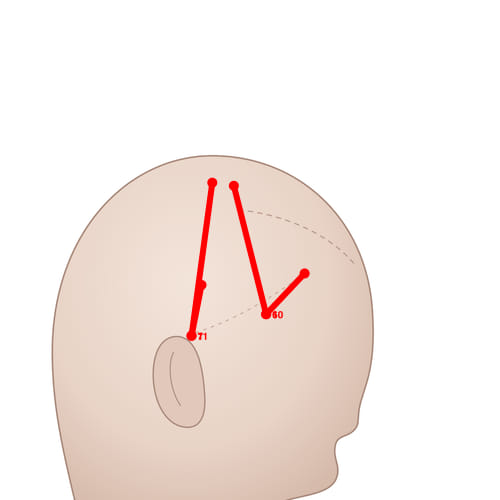
  • MS06Anterior Oblique Line of Vertex-TemporalScalp Lines1 of 3
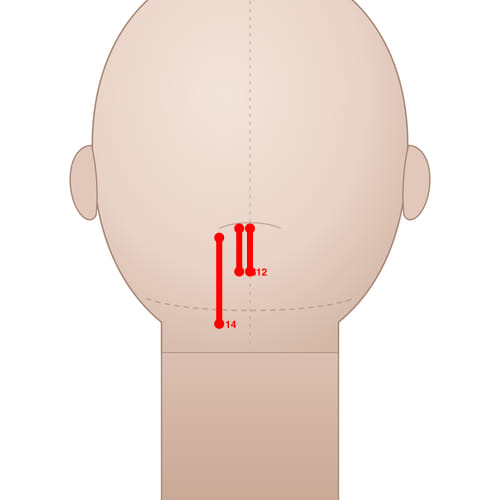
  • MS12Upper-Middle Line of OcciputScalp Lines1 of 3
  • SP06Three Yin IntersectionSpleen Meridian1 of 3
  • SP09Yin Mound SpringSpleen Meridian1 of 3
  • SP10Sea Of BloodSpleen Meridian1 of 3
  • SP11Winnower GateSpleen Meridian1 of 3

How the studies delivered it

What the 2 studies behind the entries above ran, counted once per study. A record of the trials, not a recommendation.

  • Needling1 of 2

After a treatment: what large safety surveys recorded, and which reactions need a doctor.

Each card names its evidence kind. What these labels mean

Protocol (6 points)

ST36 · SP06 · SP09 · GB34 · GB40 · LV03

Study-reported

Point selection reported in a published study.

doi:10.19917/j.cnki.1005-0779.024045 ↗
Not corroborated. No other study in the index uses any of these points for this search.
Locations and cautions6 points

ST36Leg Three Miles
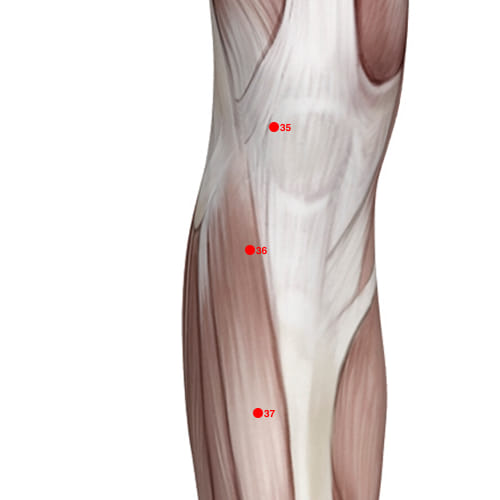
ST36 acupoint
Click to enlarge

Click to view all layers

Meridian: Stomach Meridian

Chinese: 足三里 (zú sān lǐ)

Location: 3 thumb widths below ST35, 1 finger breadth (middle finger) from anterior border of the tibia.

Cautions: Caution in cases of severe varicose veins.

Listed for: Cough, Fever, Poor Appetite, Diarrhea, Shortness of Breath

SP06Three Yin Intersection
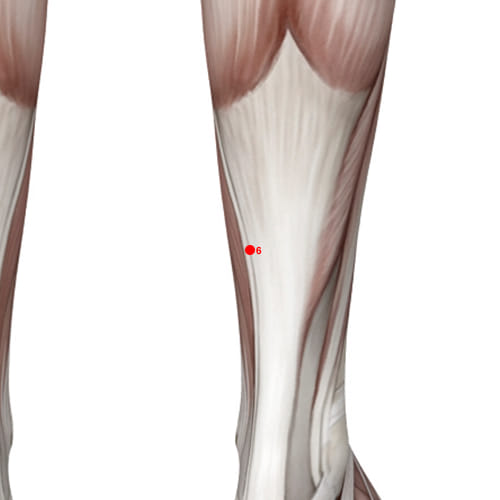
SP06 acupoint
Click to enlarge

Click to view all layers

Meridian: Spleen Meridian

Chinese: 三陰交 (sān yīn jiāo)

Location: 3 thumb widths directly above the tip of the medial malleolus posterior to the medial border of the tibia.

Cautions: Traditionally forbidden in pregnancy – these are the points used to bring on labour at term. Controlled data show no excess of preterm birth or stillbirth (Carr 2015), but in pregnancy needle only on a clear obstetric indication.

Listed for: Diarrhea, Dizziness, Tinnitus, Palpitations, Abdominal Bloating

SP09Yin Mound Spring
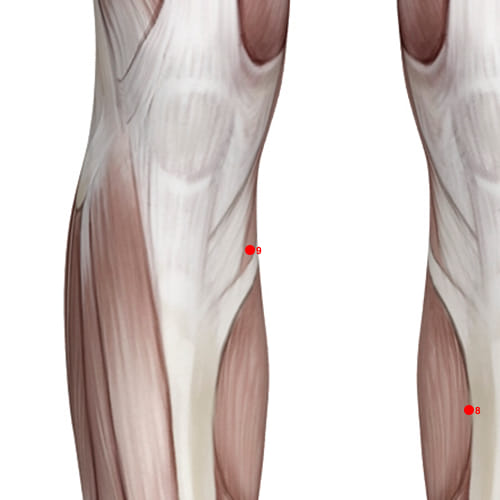
SP09 acupoint
Click to enlarge

Click to view all layers

Meridian: Spleen Meridian

Chinese: 陰陵泉 (yīn líng quán)

Location: On the lower border of the medial condyle of the tibia in the depression the posterior and inferior to the medial condyle of the tibia.

Cautions: Avoid in cases of knee inflammation.

Listed for: Heat Chest, Fever, Diarrhea, Shortness of Breath, Jaundice

GB34Yang Mound Spring
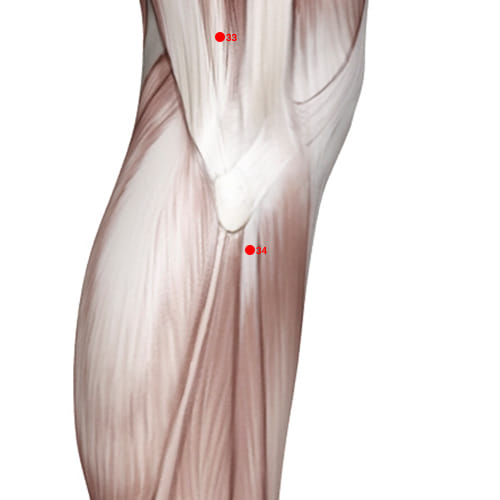
GB34 acupoint
Click to enlarge

Click to view all layers

Meridian: Gallbladder Meridian

Chinese: 陽陵泉 (yáng líng quán)

Location: In the depression the anterior and inferior to the head of the fibula.

Cautions: No specific contraindications.

Listed for: Fever, Knee Pain, Jaundice, Constipation, Vomiting

GB40Mound
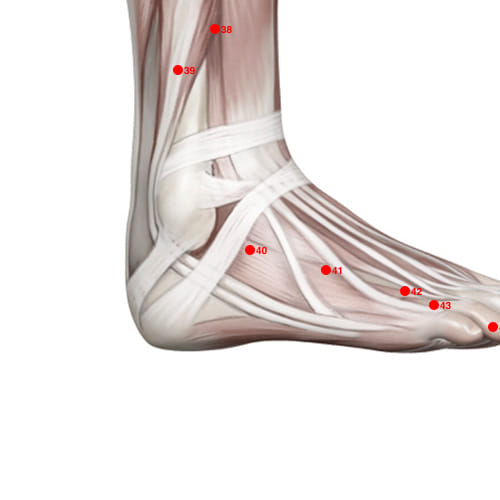
GB40 acupoint
Click to enlarge

Click to view all layers

Meridian: Gallbladder Meridian

Chinese: 丘墟 (qiū xū)

Location: Anterior and inferior to the external malleolus in the depression on the lateral side of the tendon of the extensor digitorum longus.

Cautions: No specific contraindications.

Listed for: Chest Pain, Fever, Common Cold, Vomiting, Redness

LV03Great Surge
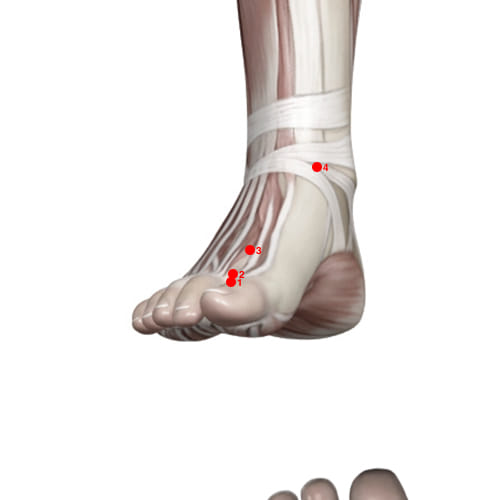
LV03 acupoint
Click to enlarge

Click to view all layers

Meridian: Liver Meridian

Chinese: 太衝 (tài chōng)

Location: On the dorsum of the foot in the depression the distal to the junction of the 1st and 2nd metatarsal bones.

Cautions: Monitor blood pressure and avoid strong stimulation where hypertension is uncontrolled or unstable; hypertensive crisis is a medical emergency.

Listed for: Cough, Diarrhea, Anxiety, Shortness of Breath, Sweating
Protocol (7 points)

SP10 · SP11 · BL37 · BL38 · GV20 · MS06 · MS12

Study-reported

Point selection reported in a published study.

doi:10.19917/j.cnki.1005-0779.024045 ↗
Corroborated by a second study. GV20 also appears in another study-reported protocol for the same search. A second publication is not necessarily a second research group. doi:10.13703/j.0255-2930.20231201-k0001 ↗
Locations and cautions7 points

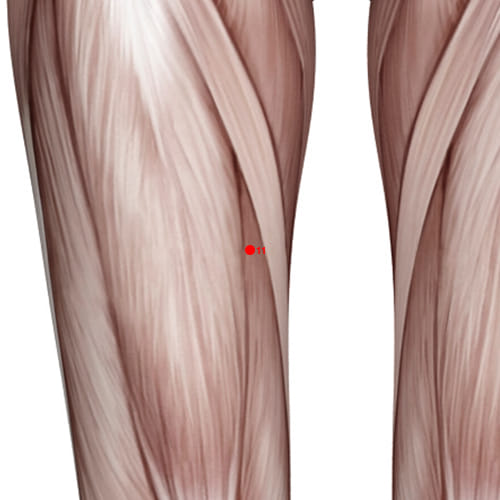
SP10Sea Of Blood

SP10 acupoint
Click to enlarge

Click to view all layers

Meridian: Spleen Meridian

Chinese: 血海 (xuè hǎi)

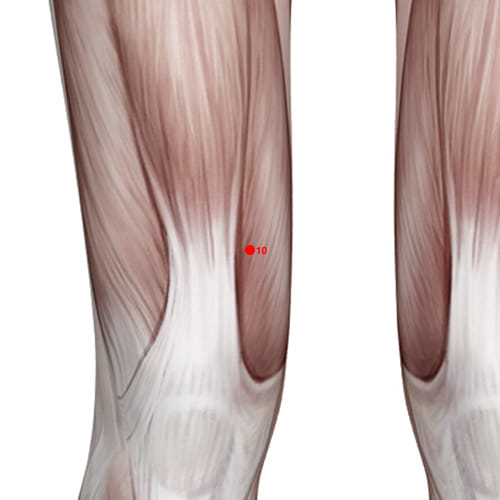
Location: When knee is flexed point is 2 thumb widths above the mediosuperior border of the patella on the bulge of the medial portion of the quadriceps femoris.

Cautions: Anticoagulant therapy or a coagulopathy raises the risk of haematoma at the needling site – apply prolonged pressure on withdrawal. The precaution governs technique; bleeding disorders remain a treatable indication.

Listed for: Knee Pain, Absent Periods, Blood Stagnation, Pain, Hives

SP11Winnower Gate

SP11 acupoint
Click to enlarge

Click to view all layers

Meridian: Spleen Meridian

Chinese: 箕門 (jī mén)

Location: 6 thumb widths above the SP10 on the line drawn from SP10 to the SP12.

Cautions: No specific contraindications.

Listed for: Heat, Pain, Damp, Urinary Retention, Bedwetting

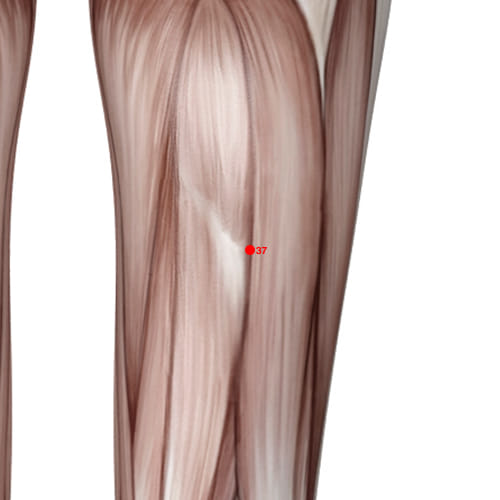
BL37Gate Of Abundance

BL37 acupoint
Click to enlarge

Click to view all layers

Meridian: Bladder Meridian

Chinese: 殷門 (yīn mén)

Location: 6 thumb widths below BL36 on the line joining BL36 and BL40.

Cautions: No specific contraindications.

Listed for: Back Pain, Hip Pain, Pain, Thigh Pain, Sciatica

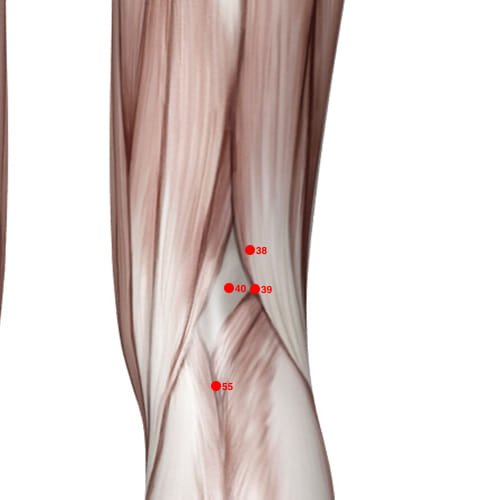
BL38Superficial Cleft

BL38 acupoint
Click to enlarge

Click to view all layers

Meridian: Bladder Meridian

Chinese: 浮郄 (fú xì)

Location: 1 thumb width above the BL39 on the medial side of the tendon of the biceps femoris; point is located with knee slightly flexed.

Cautions: No specific contraindications.

Listed for: Heat, Pain, Turmoil Disorder, Contraction, Cramping

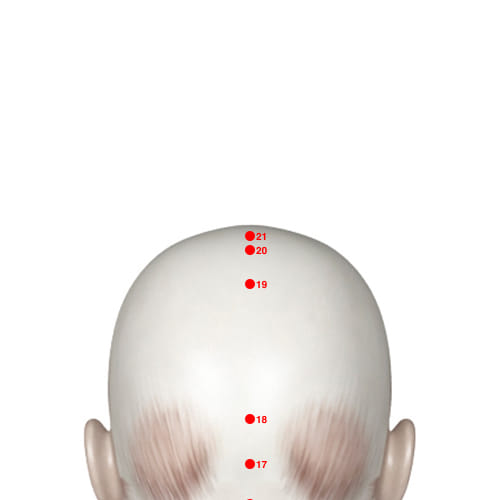
GV20100 Convergences

GV20 acupoint
Click to enlarge

Click to view all layers

Meridian: Governing Vessel

Chinese: 百會 (bǎi huì)

Location: On the midline of the head 5 thumb widths directly above the midpoint of the anterior hairline approximately on the midpoint of the line connecting apex of the ears.

Cautions: No specific contraindications.

Listed for: Cough, Chest Pain, Palpitations, Jaundice, Qi Deficiency

MS06Anterior Oblique Line of Vertex-Temporal

MS06 acupoint
Click to enlarge

Click to enlarge

Meridian: Scalp Lines

Chinese: 頂顳前斜線 (dǐng niè qián xié xiàn)

Location: From Qianshencong (1 cun anterior to GV20) obliquely to GB06 Xuanli, crossing the bladder and gallbladder meridians.

MS12Upper-Middle Line of Occiput

MS12 acupoint
Click to enlarge

Click to enlarge

Meridian: Scalp Lines

Chinese: 枕上正中線 (zhěn shàng zhèng zhōng xiàn)

Location: On the occiput, along the posterior midline.

Protocol (2 points)

GV20 · XH03

Study-reported

Needling · 8 sessions over 4 weeks

Point selection reported in a published study.

doi:10.13703/j.0255-2930.20231201-k0001 ↗
Corroborated by a second study. GV20 also appears in another study-reported protocol for the same search. A second publication is not necessarily a second research group. doi:10.19917/j.cnki.1005-0779.024045 ↗
Locations and cautions2 points

GV20100 Convergences

GV20 acupoint
Click to enlarge

Click to view all layers

Meridian: Governing Vessel

Chinese: 百會 (bǎi huì)

Location: On the midline of the head 5 thumb widths directly above the midpoint of the anterior hairline approximately on the midpoint of the line connecting apex of the ears.

Cautions: No specific contraindications.

Listed for: Cough, Chest Pain, Palpitations, Jaundice, Qi Deficiency

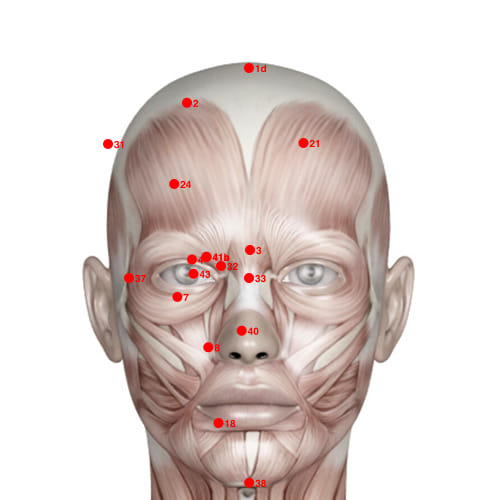
XH03Hall Of Impression Or Seal Hall

XH03 acupoint
Click to enlarge

Click to view all layers

Meridian: Extra Points: Head

Chinese: 印堂 (yìn táng)

Location: At the glabella, at the midpoint between the medial extremities of the eyebrows.

Cautions: No specific contraindications.

Listed for: Anxiety, Dizziness, Wind, Facial Pain, Insomnia

AcuiQ Self-Treatment Guide
Acupressure you can do at home, every protocol traced to a trial. – $12.99, free updates for life

Related symptoms

Often treated alongside Balance Disorder: