Acupuncture Points for Heart Qi Deficiency

2 sourced protocols, each with its citation.

Points cited for Heart Qi Deficiency

How often each point appears across the 2 entries ranked highest for Heart Qi Deficiency. Citation frequency, not a recommendation.

  • BL15Heart Shu PointBladder Meridian2 of 2
  • HT07Spirit GateHeart Meridian2 of 2
  • BL14Absolute Yin Shu PointBladder Meridian1 of 2
  • BL20Spleen Shu PointBladder Meridian1 of 2
  • SP01Hidden WhiteSpleen Meridian1 of 2
  • SP06Three Yin IntersectionSpleen Meridian1 of 2
  • XB02T5Hua Tuo's Para-Vertebral Point - T5Extra Points: Back1 of 2
  • XH16Peaceful SleepExtra Points: Head1 of 2

How the studies delivered it

None of the studies behind these entries says how the points were stimulated or for how long.

After a treatment: what large safety surveys recorded, and which reactions need a doctor.

No study in this index covers Heart Qi Deficiency

Every protocol below comes from a clinical text or a website. Nothing here has a published trial behind it, so no two independent sources have been shown to agree. How often that happens

Each card names its evidence kind. What these labels mean

Protocol (4 points)

90% match

HT07 · BL14 · BL15 · XB02T5

Text or case report

Point selection recorded in a clinical text or case report.

Yang Yong-Xuan, clinical point-selection notes
Locations and cautions4 points

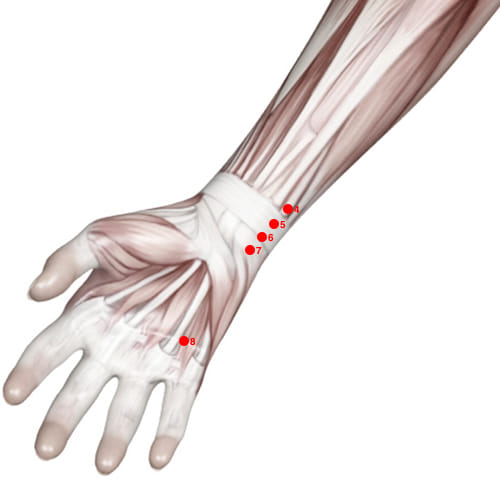
HT07Spirit Gate

HT07 acupoint
Click to enlarge

Click to view all layers

Meridian: Heart Meridian

Chinese: 神門 (shén mén)

Location: At the ulnar end of the transverse crease of the wrist in the depression on the radial side of the tendon of the flexor carpi ulnaris.

Cautions: Caution in cardiac arrhythmias.

Listed for: Anxiety, Shortness of Breath, Palpitations, Common Cold, Heat

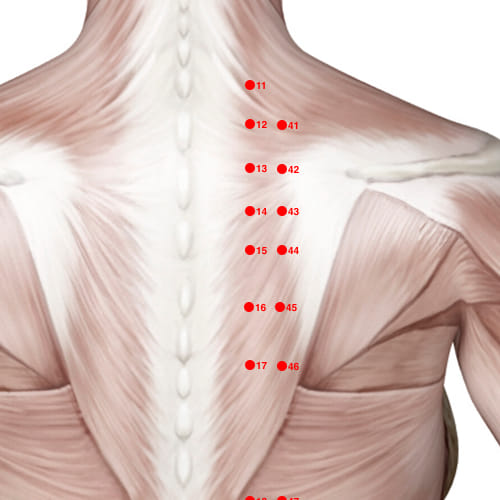
BL14Absolute Yin Shu Point

BL14 acupoint
Click to enlarge

Click to view all layers

Meridian: Bladder Meridian

Chinese: 厥陰俞 (jué yīn shū)

Location: 1.5 thumb widths lateral to the du mai at the level of the lower border of the spinous process of the 4th thoracic vertebra.

Cautions: Avoid deep perpendicular needling.

Listed for: Cough, Chest Pain, Asthma, Palpitations, Vomiting

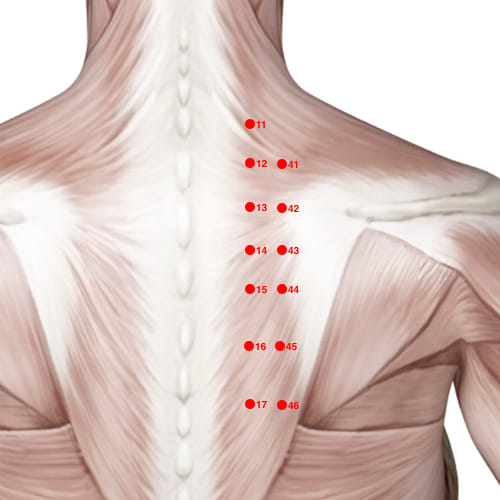
BL15Heart Shu Point

BL15 acupoint
Click to enlarge

Click to view all layers

Meridian: Bladder Meridian

Chinese: 心俞 (xīn shū)

Location: 1.5 thumb widths lateral to the GV11 at the level of the lower border of the spinous process of the 5th thoracic vertebra.

Cautions: Avoid deep perpendicular needling – risk of pneumothorax. New, worsening or unstable cardiac symptoms need medical assessment before treatment.

Listed for: Cough, Chest Pain, Anxiety, Sweating, Coughing Blood

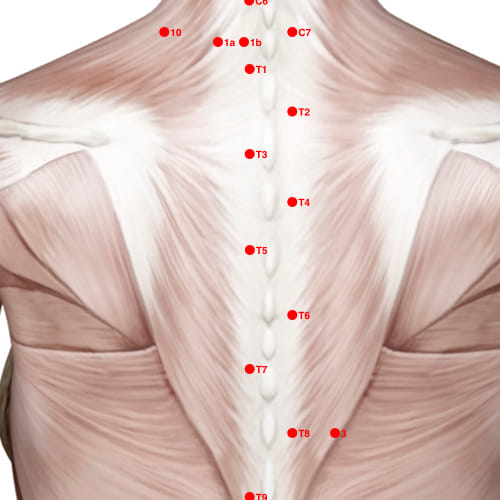
XB02T5Hua Tuo's Para-Vertebral Point - T5

XB02T5 acupoint
Click to enlarge

Click to view all layers

Meridian: Extra Points: Back

Chinese: 華佗夾脊 (huà tuó jiā jǐ)

Location: 0.5 - 1 thumb width lateral to the depressions below the spinous processes of the twelve thoracic vertebrae & five lumbar vertebrae in the clinical practice the points located 0.5 - 1 thumb width lateral to the depressions below the spinous processes of the seven cervical vertebra are also used as additional huatuojiaji points.

Cautions: Avoid deep perpendicular needling; risk of pneumothorax.

Listed for: Qi Stagnation, Heart Disorder, Circulation Blood, Regulate Six Fu, Regulate Five Zang

Protocol (6 points)

70% match

SP01 · SP06 · HT07 · BL15 · BL20 · XH16

Website

Point selection published on a website. Not peer-reviewed – check it before relying on it.

sacredlotus.com ↗
Locations and cautions6 points

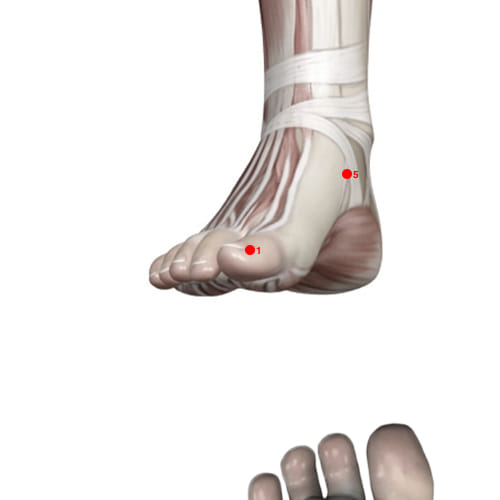
SP01Hidden White

SP01 acupoint
Click to enlarge

Click to view all layers

Meridian: Spleen Meridian

Chinese: 隱白 (yǐn bái)

Location: On the medial side of the great the toe 0.1 thumb width posterior to the corner of the nail.

Cautions: Anticoagulant therapy or a coagulopathy raises the risk of haematoma at the needling site – apply prolonged pressure on withdrawal. The precaution governs technique; bleeding disorders remain a treatable indication.

Listed for: Heat Chest, Fever, Diarrhea, Shortness of Breath, Depression

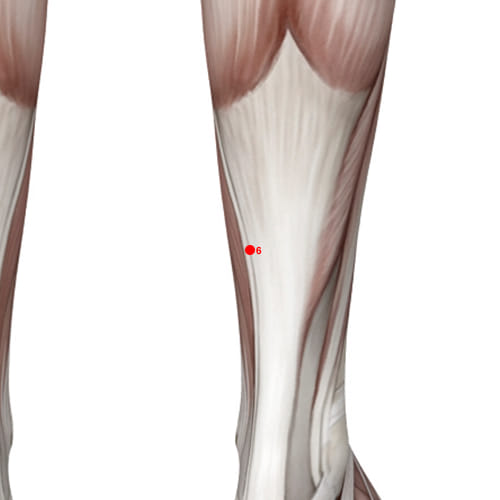
SP06Three Yin Intersection

SP06 acupoint
Click to enlarge

Click to view all layers

Meridian: Spleen Meridian

Chinese: 三陰交 (sān yīn jiāo)

Location: 3 thumb widths directly above the tip of the medial malleolus posterior to the medial border of the tibia.

Cautions: Traditionally forbidden in pregnancy – these are the points used to bring on labour at term. Controlled data show no excess of preterm birth or stillbirth (Carr 2015), but in pregnancy needle only on a clear obstetric indication.

Listed for: Diarrhea, Dizziness, Tinnitus, Palpitations, Abdominal Bloating

HT07Spirit Gate

HT07 acupoint
Click to enlarge

Click to view all layers

Meridian: Heart Meridian

Chinese: 神門 (shén mén)

Location: At the ulnar end of the transverse crease of the wrist in the depression on the radial side of the tendon of the flexor carpi ulnaris.

Cautions: Caution in cardiac arrhythmias.

Listed for: Anxiety, Shortness of Breath, Palpitations, Common Cold, Heat

BL15Heart Shu Point

BL15 acupoint
Click to enlarge

Click to view all layers

Meridian: Bladder Meridian

Chinese: 心俞 (xīn shū)

Location: 1.5 thumb widths lateral to the GV11 at the level of the lower border of the spinous process of the 5th thoracic vertebra.

Cautions: Avoid deep perpendicular needling – risk of pneumothorax. New, worsening or unstable cardiac symptoms need medical assessment before treatment.
Listed for: Cough, Chest Pain, Anxiety, Sweating, Coughing Blood

BL20Spleen Shu Point

BL20 acupoint
Click to enlarge

Click to view all layers

Meridian: Bladder Meridian

Chinese: 脾俞 (pí shū)

Location: 1.5 thumb widths lateral to the GV06 at the level of the lower border of the spinous process of the 11th thoracic vertebra.

Cautions: Avoid deep perpendicular needling.

Listed for: Cough, Fever, Poor Appetite, Diarrhea, Spleen Qi Deficiency

XH16Peaceful Sleep

XH16 acupoint
Click to enlarge

Click to view all layers

Meridian: Extra Points: Head

Chinese: 安眠 (ān mián)

Location: Behind the ear, midway between fengchi gb-20 & yifeng sj-17, close but slightly posterior & inferior to the wangu gb-12.

Cautions: No specific contraindications.

Listed for: Dizziness, Tinnitus, Palpitations, Epilepsy, Insomnia

AcuiQ Self-Treatment Guide
Acupressure you can do at home, every protocol traced to a trial. – $12.99, free updates for life

Related symptoms

Often treated alongside Heart Qi Deficiency: