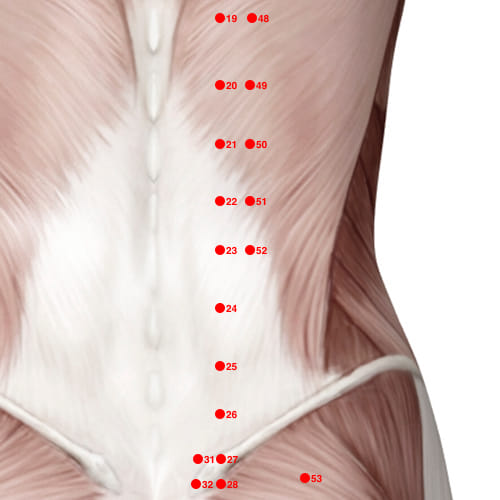
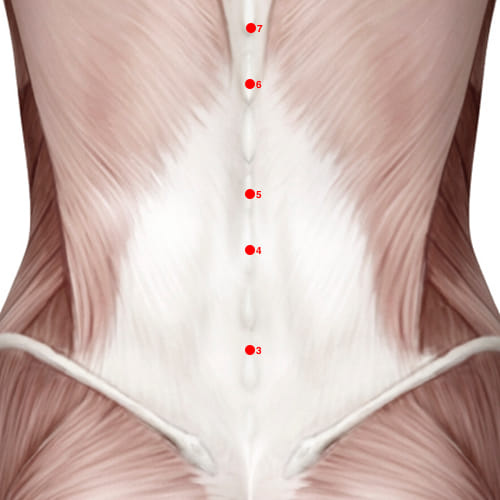
Protocol (4 points)
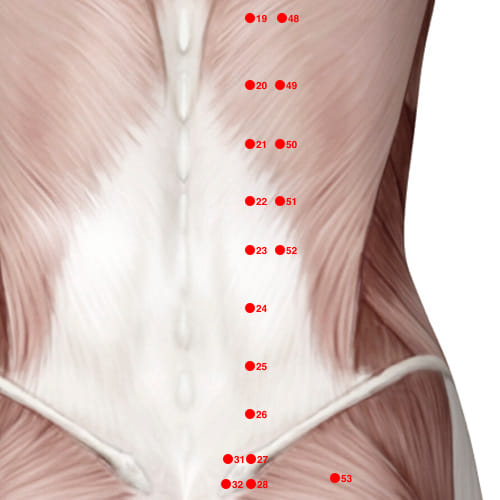
100%BL13Lung Shu Point
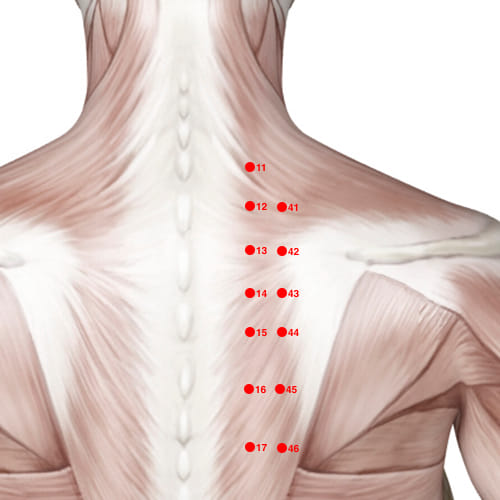
Click to view all layers
🗺️ Meridian: Bladder Meridian
🇨🇳 Chinese: 肺俞 (fèi shū)
🎯 Location: 1.5 thumb widths lateral to the GV12 at the level of the lower border of the spinous process of the 3rd thoracic vertebra.
⚠️ Cautions: Avoid deep perpendicular needling.
🛡️ Treats: Cough, Chest Pain, Fever, Shortness of Breath, Asthma
BL15Heart Shu Point
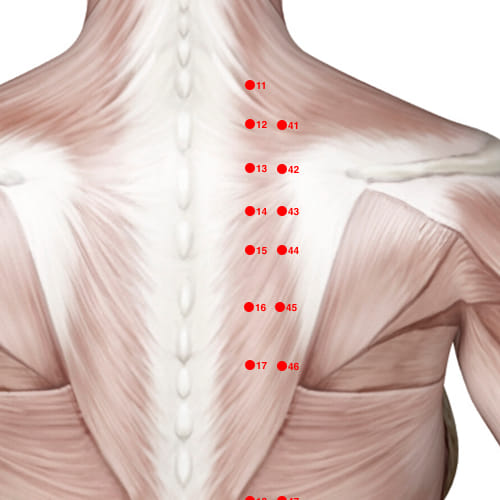
Click to view all layers
🗺️ Meridian: Bladder Meridian
🇨🇳 Chinese: 心俞 (xīn shū)
🎯 Location: 1.5 thumb widths lateral to the GV11 at the level of the lower border of the spinous process of the 5th thoracic vertebra.
⚠️ Cautions: Avoid deep perpendicular needling – risk of pneumothorax. New, worsening or unstable cardiac symptoms need medical assessment before treatment.
🛡️ Treats: Cough, Chest Pain, Anxiety, Sweating, Coughing Blood
BL17Diaphragm Shu Point
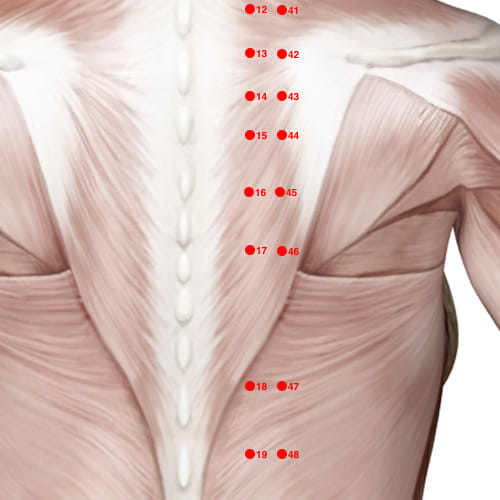
Click to view all layers
🗺️ Meridian: Bladder Meridian
🇨🇳 Chinese: 膈俞 (gé shū)
🎯 Location: 1.5 thumb widths lateral to the GV09 at the level of the lower border of the spinous process of the 7th thoracic vertebra.
⚠️ Cautions: Avoid deep perpendicular needling.
🛡️ Treats: Cough, Fever, Shortness of Breath, Sweating, Dizziness
BL20Spleen Shu Point
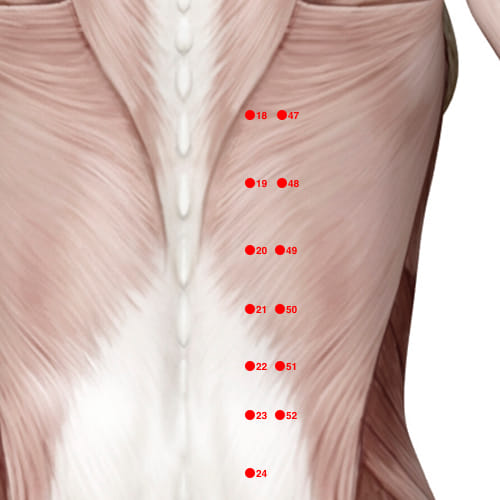
Click to view all layers
🗺️ Meridian: Bladder Meridian
🇨🇳 Chinese: 脾俞 (pí shū)
🎯 Location: 1.5 thumb widths lateral to the GV06 at the level of the lower border of the spinous process of the 11th thoracic vertebra.
⚠️ Cautions: Avoid deep perpendicular needling.
🛡️ Treats: Cough, Fever, Poor Appetite, Diarrhea, Spleen Qi Deficiency
Needling · a 6-week course
Point selection reported in a published study.
doi:10.3389/fpsyt.2025.1717290 ↗