Acupuncture Points for Subluxation Shoulder Poststroke

4 sourced protocols, each with its citation.

Points cited for Subluxation Shoulder Poststroke

How often each point appears across the 4 entries ranked highest for Subluxation Shoulder Poststroke. Citation frequency, not a recommendation.

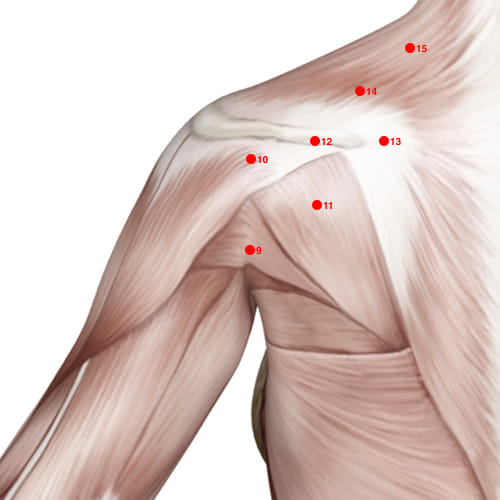
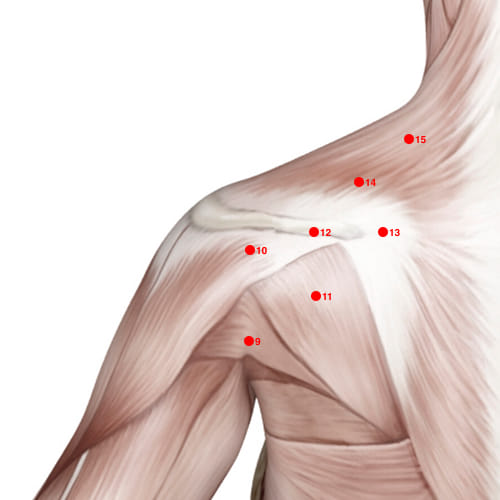
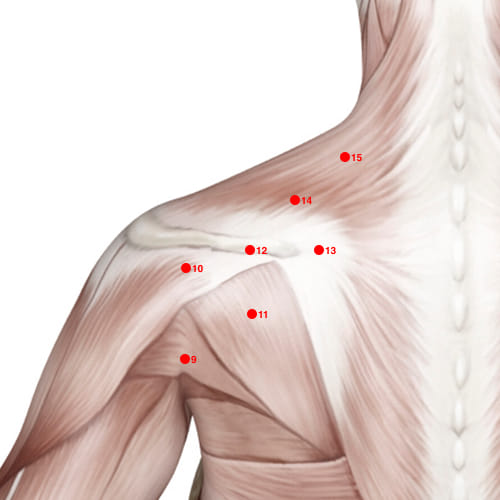
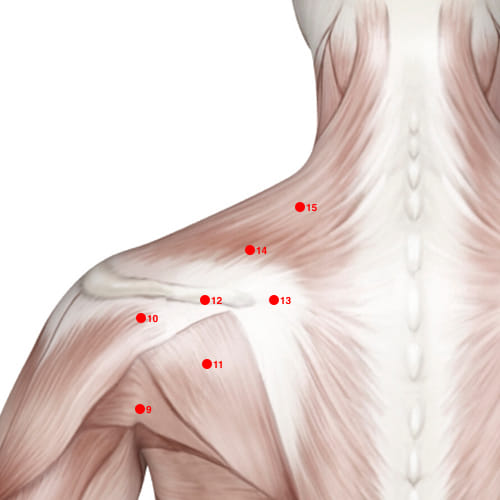
  • SI09True ShoulderSmall Intestine Meridian4 of 4
  • LI14Upper Arm ProminenceLarge Intestine Meridian3 of 4
  • LI15Shoulder And ClavicleLarge Intestine Meridian2 of 4
  • SI10Upper Arm Shu PointSmall Intestine Meridian2 of 4
  • SI12Grasping The WindSmall Intestine Meridian2 of 4
  • SI14Outer Shoulder PointSmall Intestine Meridian2 of 4
  • TB14Shoulder Bone HoleTriple Burner Meridian2 of 4
  • XL18Supreme ShoulderExtra Points: Lower limbs1 of 4
  • XU12Shoulder Front / Shoulder MausoleumExtra Points: Upper limbs1 of 4

How the studies delivered it

What the 3 studies behind the entries above ran, counted once per study. A record of the trials, not a recommendation.

  • Electroacupuncture3 of 3

After a treatment: what large safety surveys recorded, and which reactions need a doctor.

Each card names its evidence kind. What these labels mean

Protocol (5 points)

LI14 · SI09 · SI10 · SI12 · SI14

Study-reported

Electroacupuncture

Point selection reported in a published study.

doi:10.1155/2020/6415083 ↗
Corroborated by a second study. LI14, SI09, SI10, SI12, SI14 also appear in another study-reported protocol for the same search. A second publication is not necessarily a second research group. pubmed.ncbi.nlm.nih.gov ↗
Locations and cautions5 points

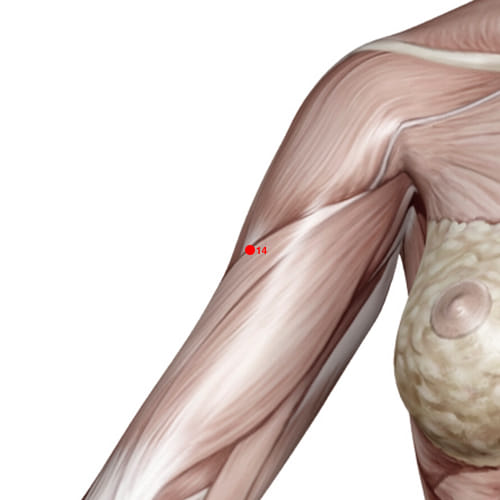
LI14Upper Arm Prominence

LI14 acupoint
Click to enlarge

Click to view all layers

Meridian: Large Intestine Meridian

Chinese: 臂臑 (bì nào)

Location: On the lateral side of the upper arm on the line connecting LI11 and LI15, 7 thumb widths above the LI11 at the insertion of the deltoid muscle.

Cautions: Caution with depth to avoid nerve damage.

Listed for: Chest Pain, Redness, Swelling, Pain, Goiter

SI09True Shoulder

SI09 acupoint
Click to enlarge

Click to view all layers

Meridian: Small Intestine Meridian

Chinese: 肩貞 (jiān zhēn)

Location: Posterior and inferior to the shoulder joint; when arm is adducted point is 1 thumb width above the posterior end of the axillary fold.

Cautions: Rule out fracture, dislocation and joint instability before needling, and do not needle into an acutely swollen joint or a haemarthrosis.

Listed for: Tinnitus, Wind, Numbness, Shoulder Blade Pain, Shoulder Pain

SI10Upper Arm Shu Point

SI10 acupoint
Click to enlarge

Click to view all layers

Meridian: Small Intestine Meridian

Chinese: 臑俞 (nào shū)

Location: When arm is adducted, point is directly above the posterior end of the axillary fold in the depression the inferior to the scapular spine.

Cautions: No specific contraindications.

Listed for: Fever, Shoulder Pain, Pain, Chills, Arm Pain

SI12Grasping The Wind

SI12 acupoint
Click to enlarge

Click to view all layers

Meridian: Small Intestine Meridian

Chinese: 秉風 (bǐng fēng)

Location: In the center of the suprascapular fossa directly above the SI11; when arm is lifted point is at the site of the depression.

Cautions: No specific contraindications.

Listed for: Wind, Benefit Shoulders, Benefit Scapula, Benefit Shoulders, Benefit Scapula

SI14Outer Shoulder Point

SI14 acupoint
Click to enlarge

Click to view all layers

Meridian: Small Intestine Meridian

Chinese: 肩外俞 (jiān wài shū)

Location: 3 thumb widths lateral to the lower border of the spinous process of the 1st thoracic vertebra where GV13 is located.

Cautions: Avoid deep perpendicular needling; risk of pneumothorax.

Listed for: Fever, Wind, Shoulder Blade Pain, Shoulder Pain, Pain

Protocol (3 points)

LI15 · SI09 · TB14

Study-reported

Electroacupuncture

Point selection reported in a published study.

doi:10.1155/2020/6415083 ↗
Corroborated by a second study. LI15, SI09, TB14 also appear in another study-reported protocol for the same search. A second publication is not necessarily a second research group. doi:10.1155/2021/5329881 ↗
Locations and cautions3 points

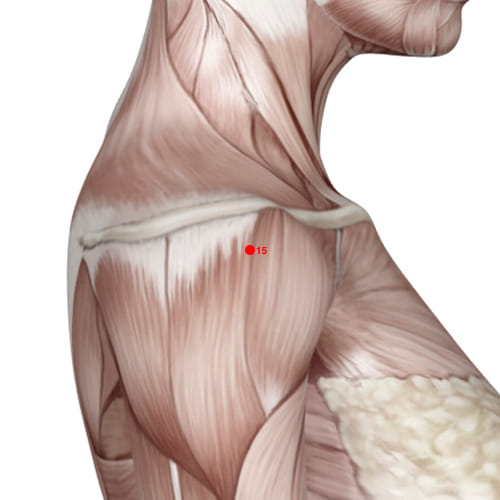
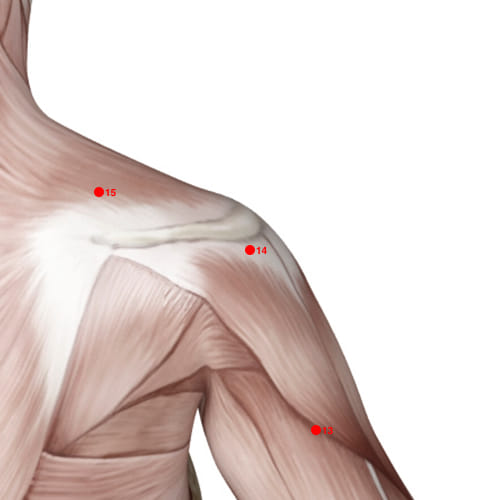
LI15Shoulder And Clavicle

LI15 acupoint
Click to enlarge

Click to view all layers

Meridian: Large Intestine Meridian

Chinese: 肩髃 (jiān yú)

Location: Anteroinferior to the acromion on the upper portion of the deltoid muscle; when arm is in the full abduction the point is in the depression the appearing at the anterior border of the acromioclavicular joint.

Cautions: Avoid deep perpendicular needling due to risk of pneumothorax; caution in shoulder injuries.

Listed for: Wind, Shoulder Pain, Pain, Goiter, Hemiplegia

SI09True Shoulder

SI09 acupoint
Click to enlarge

Click to view all layers

Meridian: Small Intestine Meridian

Chinese: 肩貞 (jiān zhēn)

Location: Posterior and inferior to the shoulder joint; when arm is adducted point is 1 thumb width above the posterior end of the axillary fold.

Cautions: Rule out fracture, dislocation and joint instability before needling, and do not needle into an acutely swollen joint or a haemarthrosis.

Listed for: Tinnitus, Wind, Numbness, Shoulder Blade Pain, Shoulder Pain

TB14Shoulder Bone Hole

TB14 acupoint
Click to enlarge

Click to view all layers

Meridian: Triple Burner Meridian

Chinese: 肩髎 (jiān liáo)

Location: On the shoulder posterior to the LI15 in the depression the inferior and posterior to the acromion the when arm is abducted.

Cautions: Rule out fracture, dislocation and joint instability before needling, and do not needle into an acutely swollen joint or a haemarthrosis.

Listed for: Numbness, Shoulder Pain, Pain, Arm Pain, Benefit Shoulders

Protocol (4 points)

LI14 · LI15 · SI09 · TB14

Study-reported

Electroacupuncture · 10 sessions over 2 weeks

Point selection reported in a published study.

doi:10.1155/2021/5329881 ↗
Corroborated by a second study. LI15, SI09, TB14 also appear in another study-reported protocol for the same search. A second publication is not necessarily a second research group. doi:10.1155/2020/6415083 ↗
Locations and cautions4 points

LI14Upper Arm Prominence

LI14 acupoint
Click to enlarge

Click to view all layers

Meridian: Large Intestine Meridian

Chinese: 臂臑 (bì nào)

Location: On the lateral side of the upper arm on the line connecting LI11 and LI15, 7 thumb widths above the LI11 at the insertion of the deltoid muscle.

Cautions: Caution with depth to avoid nerve damage.

Listed for: Chest Pain, Redness, Swelling, Pain, Goiter

LI15Shoulder And Clavicle

LI15 acupoint
Click to enlarge

Click to view all layers

Meridian: Large Intestine Meridian

Chinese: 肩髃 (jiān yú)

Location: Anteroinferior to the acromion on the upper portion of the deltoid muscle; when arm is in the full abduction the point is in the depression the appearing at the anterior border of the acromioclavicular joint.

Cautions: Avoid deep perpendicular needling due to risk of pneumothorax; caution in shoulder injuries.

Listed for: Wind, Shoulder Pain, Pain, Goiter, Hemiplegia

SI09True Shoulder

SI09 acupoint
Click to enlarge

Click to view all layers

Meridian: Small Intestine Meridian

Chinese: 肩貞 (jiān zhēn)

Location: Posterior and inferior to the shoulder joint; when arm is adducted point is 1 thumb width above the posterior end of the axillary fold.

Cautions: Rule out fracture, dislocation and joint instability before needling, and do not needle into an acutely swollen joint or a haemarthrosis.

Listed for: Tinnitus, Wind, Numbness, Shoulder Blade Pain, Shoulder Pain

TB14Shoulder Bone Hole

TB14 acupoint
Click to enlarge

Click to view all layers

Meridian: Triple Burner Meridian

Chinese: 肩髎 (jiān liáo)

Location: On the shoulder posterior to the LI15 in the depression the inferior and posterior to the acromion the when arm is abducted.

Cautions: Rule out fracture, dislocation and joint instability before needling, and do not needle into an acutely swollen joint or a haemarthrosis.

Listed for: Numbness, Shoulder Pain, Pain, Arm Pain, Benefit Shoulders

Protocol (7 points)

LI14 · SI09 · SI10 · SI12 · SI14 · XL18 · XU12

Study-reported

Electroacupuncture · 24 sessions over 4 weeks

Did better than another treatment

Intermittent-wave arm; dense-disperse and continuous-wave arms used the same points

Point selection reported in a published study.

pubmed.ncbi.nlm.nih.gov ↗
Corroborated by a second study. LI14, SI09, SI10, SI12, SI14 also appear in another study-reported protocol for the same search. A second publication is not necessarily a second research group. doi:10.1155/2020/6415083 ↗
Locations and cautions7 points

LI14Upper Arm Prominence

LI14 acupoint
Click to enlarge

Click to view all layers

Meridian: Large Intestine Meridian

Chinese: 臂臑 (bì nào)

Location: On the lateral side of the upper arm on the line connecting LI11 and LI15, 7 thumb widths above the LI11 at the insertion of the deltoid muscle.

Cautions: Caution with depth to avoid nerve damage.

Listed for: Chest Pain, Redness, Swelling, Pain, Goiter

SI09True Shoulder

SI09 acupoint
Click to enlarge

Click to view all layers

Meridian: Small Intestine Meridian

Chinese: 肩貞 (jiān zhēn)

Location: Posterior and inferior to the shoulder joint; when arm is adducted point is 1 thumb width above the posterior end of the axillary fold.

Cautions: Rule out fracture, dislocation and joint instability before needling, and do not needle into an acutely swollen joint or a haemarthrosis.

Listed for: Tinnitus, Wind, Numbness, Shoulder Blade Pain, Shoulder Pain

SI10Upper Arm Shu Point

SI10 acupoint
Click to enlarge

Click to view all layers

Meridian: Small Intestine Meridian

Chinese: 臑俞 (nào shū)

Location: When arm is adducted, point is directly above the posterior end of the axillary fold in the depression the inferior to the scapular spine.

Cautions: No specific contraindications.

Listed for: Fever, Shoulder Pain, Pain, Chills, Arm Pain

SI12Grasping The Wind

SI12 acupoint
Click to enlarge

Click to view all layers

Meridian: Small Intestine Meridian

Chinese: 秉風 (bǐng fēng)

Location: In the center of the suprascapular fossa directly above the SI11; when arm is lifted point is at the site of the depression.

Cautions: No specific contraindications.

Listed for: Wind, Benefit Shoulders, Benefit Scapula, Benefit Shoulders, Benefit Scapula

SI14Outer Shoulder Point

SI14 acupoint
Click to enlarge

Click to view all layers

Meridian: Small Intestine Meridian

Chinese: 肩外俞 (jiān wài shū)

Location: 3 thumb widths lateral to the lower border of the spinous process of the 1st thoracic vertebra where GV13 is located.

Cautions: Avoid deep perpendicular needling; risk of pneumothorax.

Listed for: Fever, Wind, Shoulder Blade Pain, Shoulder Pain, Pain

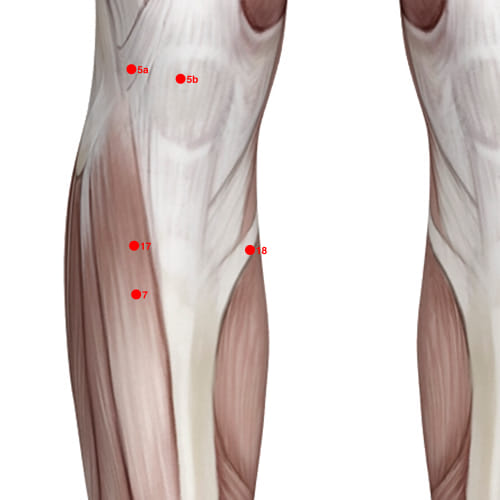
XL18Supreme Shoulder

XL18 acupoint
Click to enlarge

Click to view all layers

Meridian: Extra Points: Lower limbs

Chinese: 太肩 (tài jiān)

Location: On the leg, 0.8 directly below yinglingquan (SP09).

Cautions: Rule out fracture, dislocation and joint instability before needling, and do not needle into an acutely swollen joint or a haemarthrosis.

Listed for: Benefit Collaterals, Benefit Tendon / Ligament, Arthritis Shoulder Scapulohumeral Periarthritis, Immobility Neck Sprain, Benefit Tendon Ligament

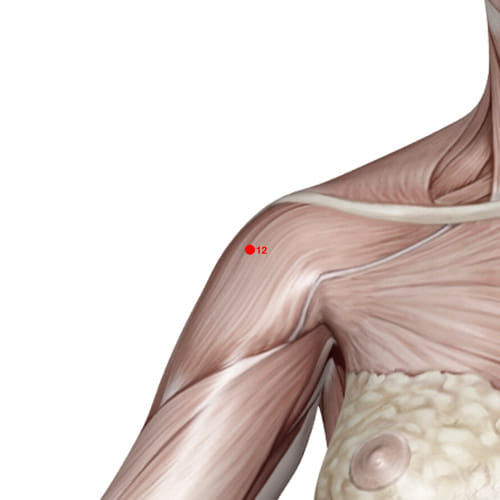
XU12Shoulder Front / Shoulder Mausoleum

XU12 acupoint
Click to enlarge

Click to view all layers

Meridian: Extra Points: Upper limbs

Chinese: 肩前 / 肩內陵穴 (jiān qián / jiān nèi líng xué)

Location: On the anterior aspect of the shoulder joint, midway between the anterior axillary crease & jianyu l.i.-15. at the medial condyle of the shoulder joint..

Cautions: Caution in acute shoulder injury.

Listed for: Qi Stagnation, Blood Stagnation, Numbness, Arm Pain, Benefit Shoulders

AcuiQ Self-Treatment Guide
Acupressure you can do at home, every protocol traced to a trial. – $12.99, free updates for life

Related symptoms

Often treated alongside Subluxation Shoulder Poststroke: