
Protocol (6 points)
BL13 · BL15 · BL18 · BL20 · BL23 · GB19
Needling + Moxibustion · 12 sessions over 4 weeks
Point selection reported in a published study.
doi:10.13702/j.1000-0607.20230536 ↗Locations and cautions6 points
BL13Lung Shu Point
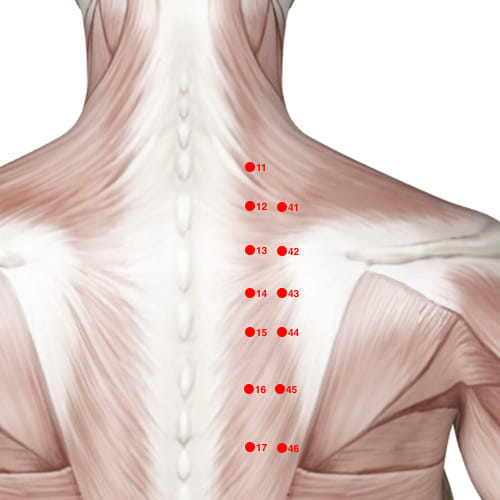
Click to view all layers
Meridian: Bladder Meridian
Chinese: 肺俞 (fèi shū)
Location: 1.5 thumb widths lateral to the GV12 at the level of the lower border of the spinous process of the 3rd thoracic vertebra.
Cautions: Avoid deep perpendicular needling.
Listed for: Cough, Chest Pain, Fever, Shortness of Breath, Asthma
BL15Heart Shu Point
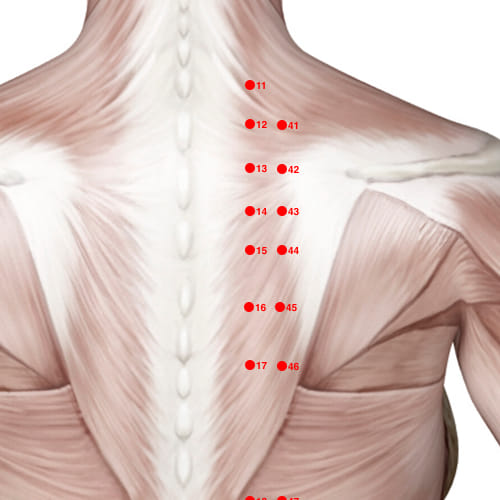
Click to view all layers
Meridian: Bladder Meridian
Chinese: 心俞 (xīn shū)
Location: 1.5 thumb widths lateral to the GV11 at the level of the lower border of the spinous process of the 5th thoracic vertebra.
Cautions: Avoid deep perpendicular needling – risk of pneumothorax. New, worsening or unstable cardiac symptoms need medical assessment before treatment.
Listed for: Cough, Chest Pain, Anxiety, Sweating, Coughing Blood
BL18Liver Shu Point
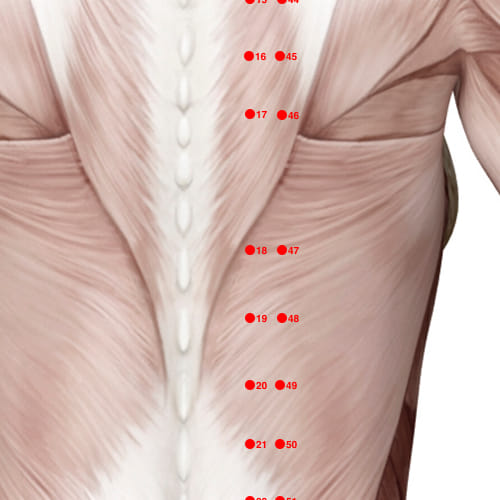
Click to view all layers
Meridian: Bladder Meridian
Chinese: 肝俞 (gān shū)
Location: 1.5 thumb widths lateral to the GV08 at the level of the lower border of the spinous process of the 9th thoracic vertebra.
Cautions: Avoid deep perpendicular needling.
Listed for: Cough, Chest Pain, Dizziness, Coughing Blood, Jaundice
BL20Spleen Shu Point
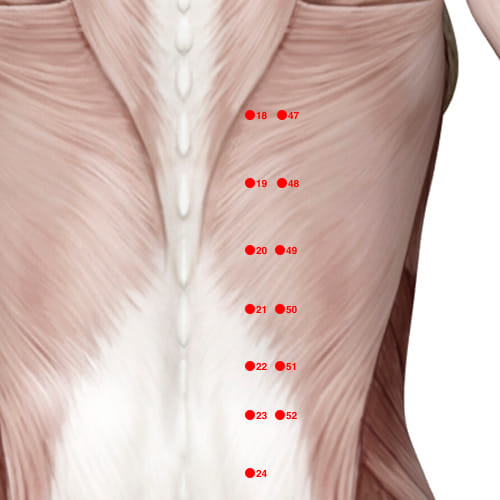
Click to view all layers
Meridian: Bladder Meridian
Chinese: 脾俞 (pí shū)
Location: 1.5 thumb widths lateral to the GV06 at the level of the lower border of the spinous process of the 11th thoracic vertebra.
Cautions: Avoid deep perpendicular needling.
Listed for: Cough, Fever, Poor Appetite, Diarrhea, Spleen Qi Deficiency
BL23Kidney Shu Point
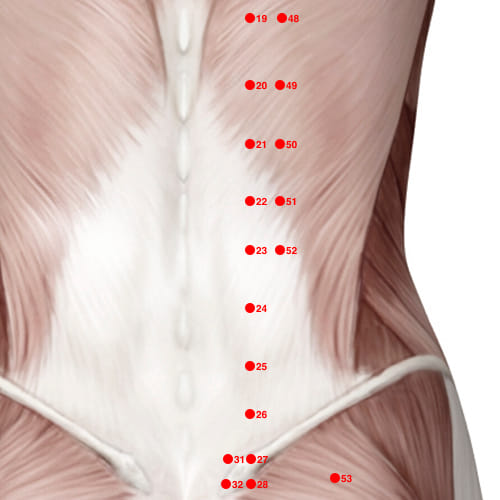
Click to view all layers
Meridian: Bladder Meridian
Chinese: 腎俞 (shèn shū)
Location: 1.5 thumb widths lateral to the GV04 at the level of the lower border of the spinous process of the 2nd lumbar vertebra.
Cautions: Avoid deep perpendicular needling.
Listed for: Cough, Diarrhea, Asthma, Tinnitus, Qi Deficiency
GB19Brain Hollow
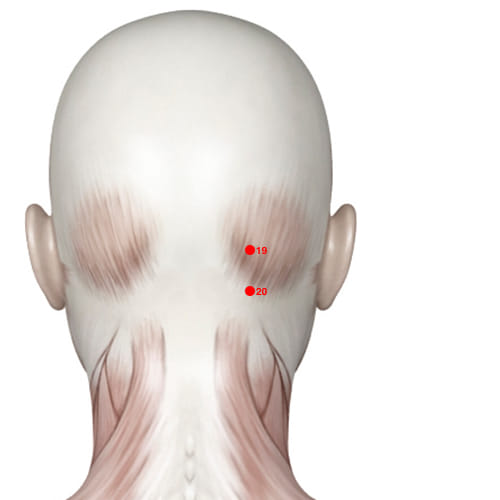
Click to view all layers
Meridian: Gallbladder Meridian
Chinese: 腦空 (nǎo kōng)
Location: On the head and on the level of the upper border of the external occipital protuberance or GV17, 22.5 thumb widths lateral to the midline of the head.
Cautions: No specific contraindications for head points.
Listed for: Dizziness, Tinnitus, Palpitations, Heat, Depression