Acupuncture Points for Lung-wei-qi Deficiency

1 sourced protocol, each with its citation.

Each card names its evidence kind. What these labels mean

Protocol (2 points)

100%

LI20 · XH03

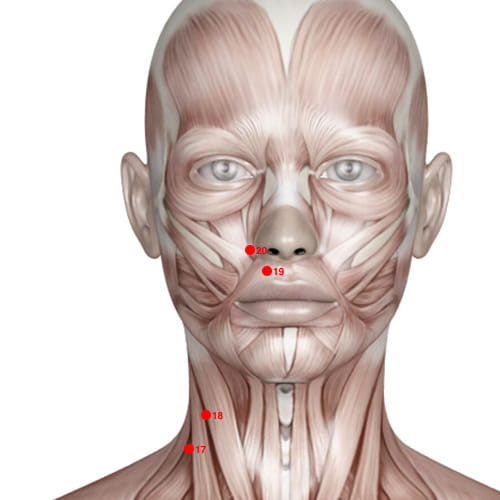
LI20Receiving Fragrance

LI20 acupoint
Click to enlarge

Click to view all layers

🗺️ Meridian: Large Intestine Meridian

🇨🇳 Chinese: 迎香 (yíng xiāng)

🎯 Location: In the nasolabial groove at the level of the midpoint of the lateral border of the ala nasi.

⚠️ Cautions: Avoid deep needling; proximity to facial artery.

🛡️ Treats: Shortness of Breath, Constipation, Heat, Wind, Numbness

XH03Hall Of Impression Or Seal Hall
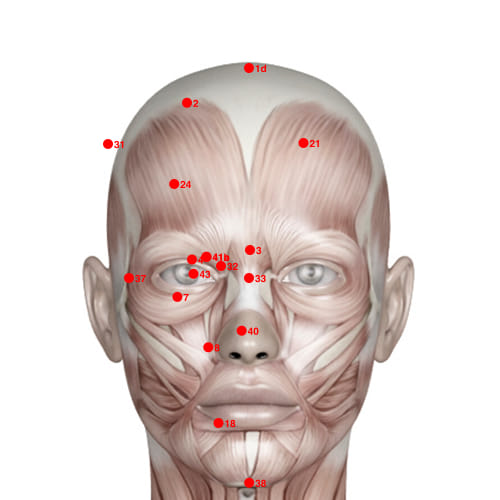
XH03 acupoint
Click to enlarge

Click to view all layers

🗺️ Meridian: Extra Points: Head

🇨🇳 Chinese: 印堂 (yìn táng)

🎯 Location: At the glabella, at the midpoint between the medial extremities of the eyebrows.

⚠️ Cautions: No specific contraindications.

🛡️ Treats: Anxiety, Dizziness, Wind, Facial Pain, Insomnia

Study-reported

Point selection reported in a published study.

doi:10.13463/j.cnki.cczyy.2025.11.009 ↗
AcuiQ Self-Treatment Guide
Acupressure you can do at home, every protocol traced to a trial. – $12.99, free updates for life

Related symptoms

Often treated alongside Lung-wei-qi Deficiency:

Points cited for Lung-wei-qi Deficiency

How often each point appears across the 1 entries ranked highest for Lung-wei-qi Deficiency. Citation frequency, not a recommendation.

  • LI20Receiving FragranceLarge Intestine Meridian1 of 1
  • XH03Hall Of Impression Or Seal HallExtra Points: Head1 of 1

How the studies delivered it

None of the studies behind these entries says how the points were stimulated or for how long.

After a treatment: what large safety surveys recorded, and which reactions need a doctor.

Disclaimer: The acupoint information provided is for educational purposes only.